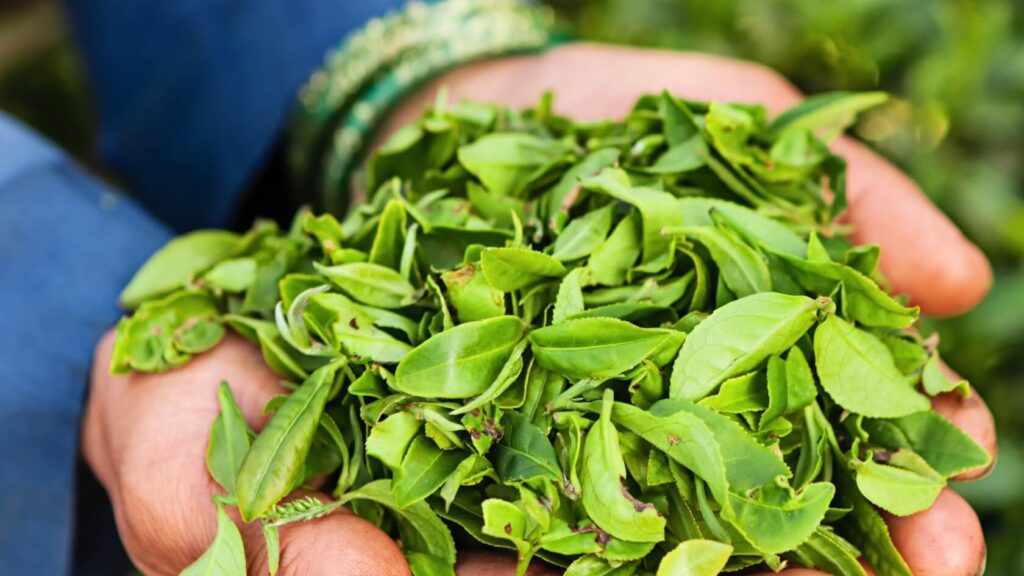
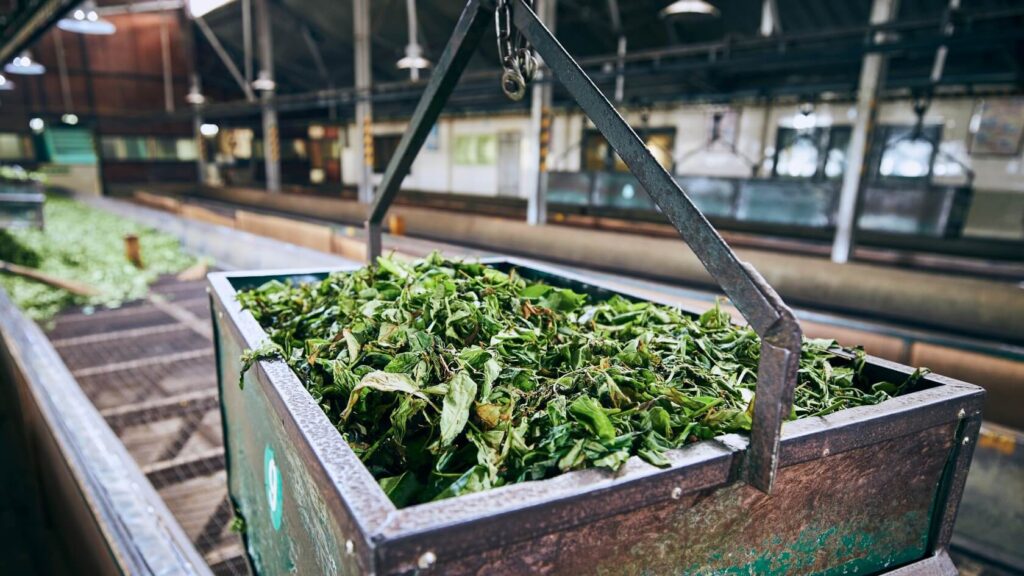
A close-up of the Green Fly (Empoasca flavescens) on a tea leaf, which causes the unique Muscatel Flavor in Darjeeling tea.
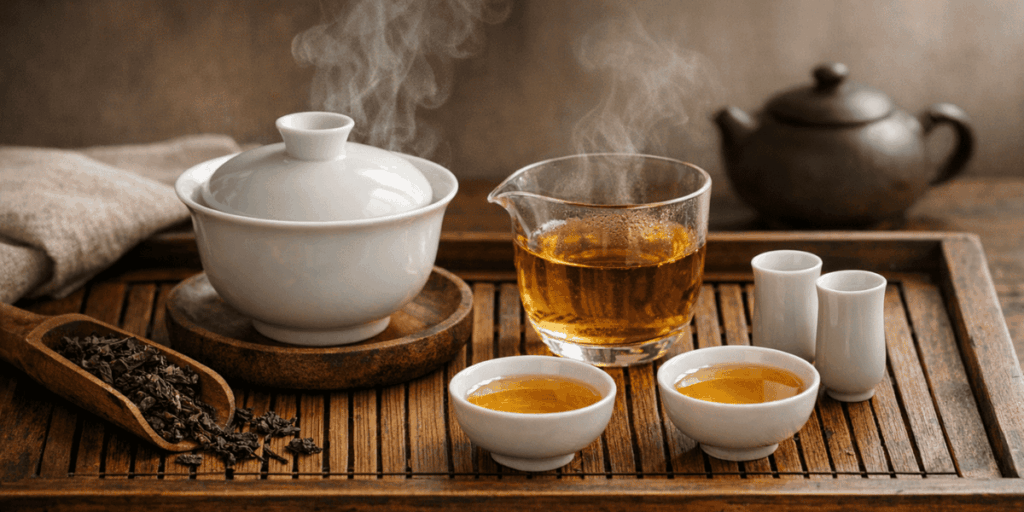
If you pour a cup of Second Flush Darjeeling, the room fills with the scent of ripe summer fruit. It is heavy, sweet, and complex. It smells less like tea and more like a dessert wine.
This is the famous Muscatel Flavor.
For decades, this flavor was a mystery. Today, we know that this “Grand Cru” profile is the result of a unique collaboration between the tea bush and a tiny, microscopic insect.
Here is the science behind the magic.
What is Muscatel Flavor?
Muscatel Flavor is a rare, complex taste profile found primarily in Second Flush Darjeeling teas, characterized by notes of dried raisins, lychee, honey, and muscat grapes.
It is distinct from the floral “green” notes of spring; it is the “wine” character that gives Darjeeling its reputation as the Champagne of Teas.
The Secret Agent: The Green Fly
The hero of this story is a bug: the Green Fly (Empoasca flavescens), or as we locals call it, the Jassid.
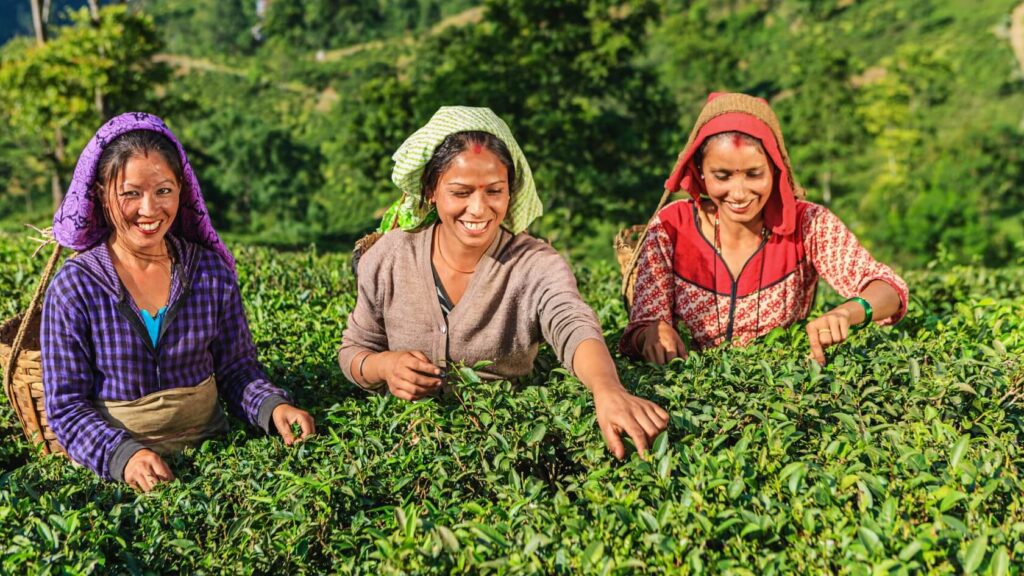
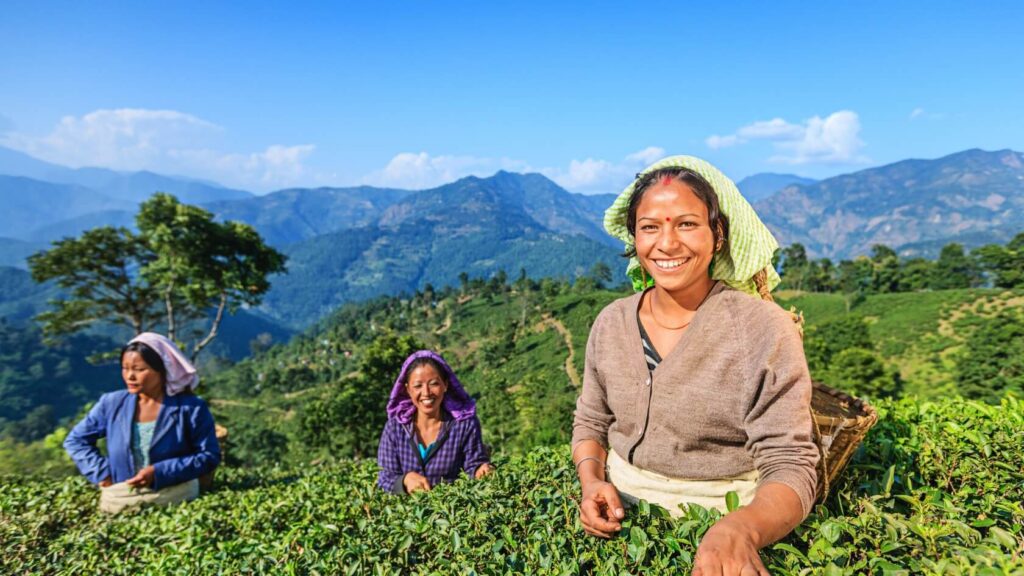
In the weeks leading up to the summer harvest (May/June), these insects attack the tea bushes. But they don’t destroy the crop; they transform it.
The “Defense Mechanism” (Science of Taste)
When the Green Fly bites the leaf to suck the sap, the tea bush initiates a stress response.
- The Attack: The insect punctures the phloem.
- The Response: To heal itself and repel the attacker, the plant releases a unique compound called phytoalexin.
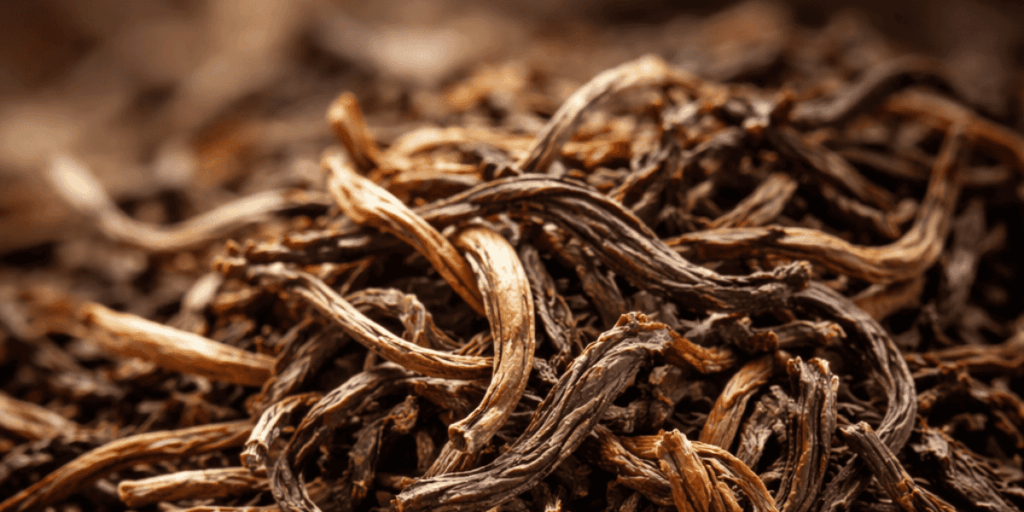
- The Result: These compounds create intense aromatic terpenes. When these “bug-bitten” leaves are plucked and oxidized, they develop that distinct fruity, honey-like “Muscatel” character.
Local Insight: “We don’t use pesticides during this period for a reason. If we kill the fly, we kill the flavor. We have to let nature take its bite first.” — Estate Manager, Castleton Valley.
Oolong vs. Black: The Processing Twist
While traditional Muscatel teas were fully oxidized Black teas, modern innovation has shifted.
Many estates are now processing these bug-bitten leaves as Oolongs. By stopping the oxidation halfway (around 50-60%), the tea maker preserves the volatile “grape” notes that might be lost in a heavy black tea roast.
The result is a liquor that looks like amber but tastes like a Late Harvest Riesling.
Top Estates for Muscatel Tea
Not all of the 87 Estates produce this flavor equally. It requires specific elevation and heavy Green Fly infestation.
- Castleton: Often considered the “king” of Muscatel. Their batch “Moonlight” often carries heavy raisin notes.
- Gopaldhara: Produces a “Red Thunder” Oolong that is famous for its spicy, musky finish.
- Jungpana: Known for a darker, “wet wood” Muscatel that appeals to the traditionalist.
How to Brew to Unlock the Flavor
To taste the wine, you must brew it gently.
- Step 1: Use water at 90°C (194°F). Boiling water burns the fruit notes.
- Step 2: Use a high leaf-to-water ratio (2.5g per cup).
- Step 3: Steep for 3 minutes (no milk).
- Step 4: Let it cool slightly. The Muscatel notes are more prominent when the tea is warm, not piping hot.
A Happy Accident
The Muscatel Flavor is proof that the best tea is not just about the soil; it is about the ecosystem. It is a flavor born from stress, survival, and a tiny green insect.
The next time you sip a Second Flush, remember: you are tasting the resilience of the Himalayas.
FAQs
Q: Does all Darjeeling tea have Muscatel Flavor? A: No. Muscatel is primarily found in Second Flush (Summer) teas. First Flush teas are floral and grassy, while Autumn teas are creamy and woody.
Q: Is Muscatel tea flavored artificially? A: Never. Genuine Muscatel Flavor is 100% natural, created by the interaction between the tea bush and the Green Fly (Empoasca flavescens).
Q: Why is Muscatel tea more expensive? A: It is a high-risk crop. The “bug attack” stunts the growth of the leaves, resulting in lower yields. The scarcity, combined with the high demand for this unique flavor, drives up the price.