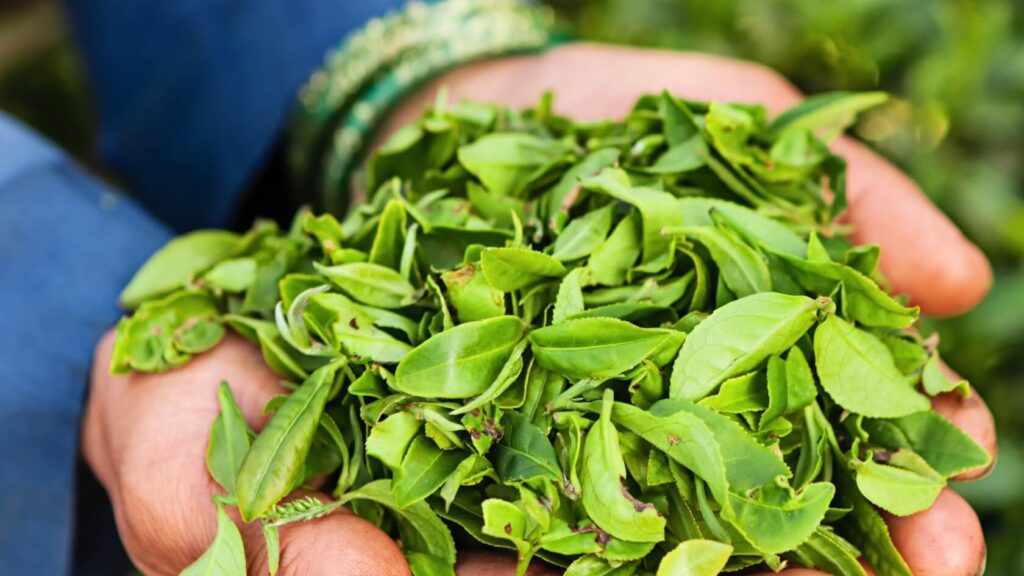
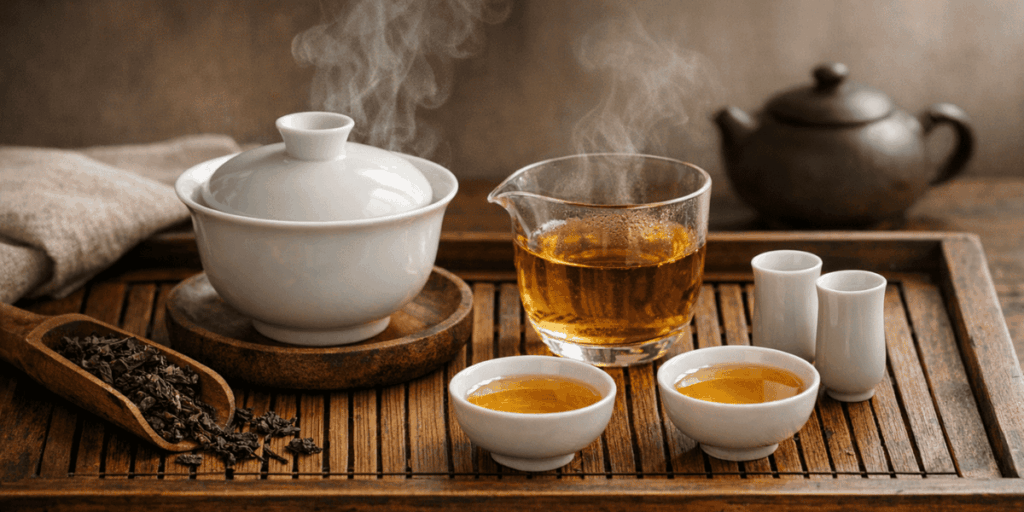
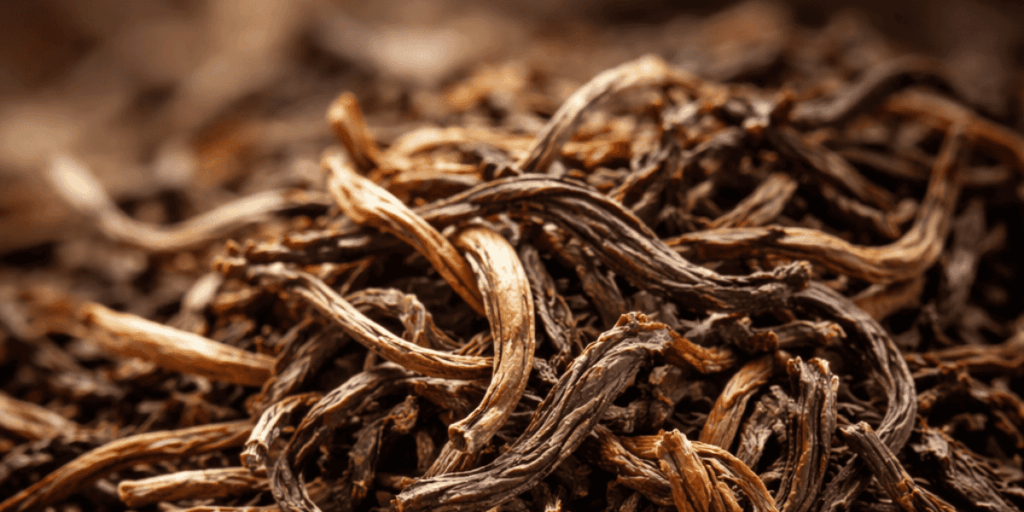
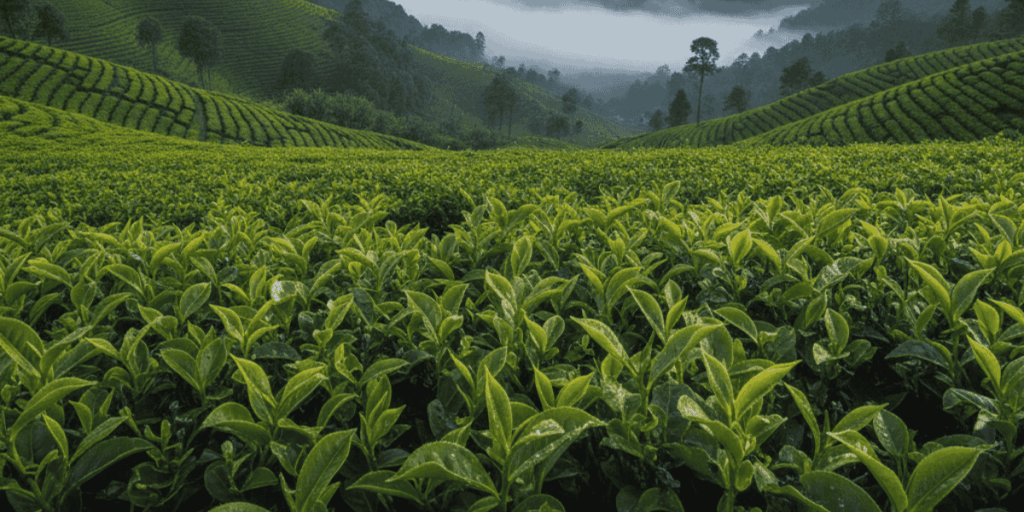
The China Bush vs Clonal debate is the single most important distinction in Darjeeling tea, yet few drinkers understand it. Standing here in the nursery of the Giddapahar Estate, looking at the young cuttings, the difference is visible to the naked eye. One is small and dark; the other is broad and bright.
But which one makes the better cup?
To understand the China Bush vs Clonal rivalry, you must think like a wine lover. It is exactly like comparing a robust Cabernet Sauvignon (China Bush) to a delicate Pinot Noir (Clonal). Both are grown in the same terroir, but their genetic code dictates a completely different sensory experience.
What is the China Bush? (The Heritage)
In the China Bush vs Clonal history, the China Bush (Camellia sinensis var. sinensis) is the ancestor. These are the original seeds smuggled out of China and planted by Dr. Archibald Campbell in 18411.
- The Roots: These plants often have a taproot that goes deep (over a meter) into the rocky soil, pulling up complex minerals2.
- The Age: Many are over 100 years old. Like “Old Vine” grapes, they produce lower yields but incredible concentration.
- The Character: They are hardy, surviving the frost and mist of high altitudes3.
When you drink a classic “Chinary” tea, you are drinking history.
What is a Clonal Plant? (The Innovation)
The “Clonal” side of the China Bush vs Clonal equation represents modern science. Starting in the late 20th century, planters began selecting specific bushes that had special flavors or higher yields.
They took cuttings from these “Mother Bushes” to create genetic replicas—hence, “Clones” or “Clonals”4.
- The Roots: They have shallower, fibrous root systems compared to the deep-rooted China bush.
- The Comparison: While China bushes are grown from seed (creating genetic diversity), every Clonal plant in a field is identical.
- The Star: The most famous is the AV2 (Ambari Vegetative 2), known for its explosive floral aroma5.
China Bush vs Clonal: The Flavor Showdown
This is where the China Bush vs Clonal battle happens: on your palate.
| Feature | China Bush (The Classic) | Clonal (The Modern) |
| Flavor Profile | Tannic, Spicy, “Masculine” 66 | Creamy, Floral, “Feminine” 7 |
| Aroma | Wet Wood, Smoke, Musk | Tropical Fruit, Flowers, Honey |
| Texture | Astringent (Brisk) | Smooth, Silky, Buttery |
| Best Flush | Second Flush (Muscatel) 88 | First Flush (Moonlight) 9 |
If you love a tea that wakes you up with a sharp bite, the China Bush wins. If you want a tea that tastes like a bouquet of lilies with zero bitterness, the Clonal wins.
The “AV2” Phenomenon
You cannot discuss China Bush vs Clonal without mentioning the legend: AV2.
This specific clonal variety has changed the economy of Darjeeling. Estates like Castleton and Giddapahar use AV2 to create “Moonlight” and “White” teas that fetch record prices at auction10101010. The AV2 leaf is often two-toned (silver and green) and produces a euphoric, peaches-and-cream flavor that the old China Bush simply cannot replicate.
Which Should You Buy?
In the China Bush vs Clonal decision, let your preference guide you:
- Buy China Bush (Chinary) if you are a traditionalist. You want the “Grit and Grip” of a classic Darjeeling. Look for estates like Jungpana or Makaibari11111111.
- Buy Clonal if you are a “Third Wave” drinker. You want distinct notes of mango, vanilla, and high floral aromatics. Look for “AV2” or “Moonlight” on the invoice12.
Conclusion
Ultimately, the China Bush vs Clonal war has no loser. The magic of Darjeeling is that we have both. We have the ancient, brooding roots of the 1800s and the bright, aromatic science of the 2000s growing on the same slope.
The next time you sip, ask yourself: Is this the deep history of the China Bush, or the floral innovation of a Clonal?
To dive deeper into plant genetics, you can visit the Tocklai Tea Research Institute (dofollow) or check the approved list of clones on the Tea Board of India (dofollow) website.
FAQs
Q: Is Clonal tea better than China Bush?
A: Not necessarily. Clonal tea is fruitier and smoother, while China Bush is more complex and astringent. “Better” depends on whether you prefer sweet/creamy notes (Clonal) or crisp/mineral notes (China Bush).
Q: What is the AV2 tea clone?
A: AV2 (Ambari Vegetative 2) is a specific tea cultivar famous in Darjeeling for producing high-quality tea with prominent floral and stone-fruit (peach/apricot) flavors.
Q: How can I tell if my tea is Chinary or Clonal?
A: Check the label or the “Invoice” details. High-end retailers will specify “Pure AV2” or “Chinary.” If the tasting notes say “Metallic,” “Mossy,” or “Crisp,” it is likely China Bush. If they say “Peach,” “Mango,” or “Cream,” it is likely Clonal.